The heft test: how weight changes our perception
Why does a little extra weight make something feel so much better?
-
 The MOO Team

Share the post


You pick something up and, almost instantly, you’ve made a judgment.
Solid? Nice.
Weighty? Probably well made.
Weirdly light? Hmm.
That snap reaction is what we like to call the heft test.
We spend a lot of time thinking about how things look. But weight is one of the most underrated parts of how a product feels. A little extra heft can make something seem more valuable, more premium, and better made before we’ve even properly used it.
So why does weight change what we think something is worth?
Key takeaways
- A little extra weight can make a product feel more valuable, premium and substantial.
- Packaging weight can even change how people judge the product inside.
- Touch, texture and balance all shape how we perceive quality.
- More weight isn’t always better. The sweet spot is substantial, not cumbersome.
- For brands, good heft should come from thoughtful materials and construction, not weight for weight’s sake.
Why heavier can feel better

Our brains are pretty quick to equate weight with substance. According to one study, people handled identical-looking phones with different weights. The heavier ones were rated as more valuable and appealing, and people expected them to cost more.
Wine bottles tell a similar story. According to a study, researchers looking at 275 bottles found that heavier bottles tended to contain more expensive wine. Consumers also associated bottle weight with higher price and quality.
So yes, we really are picking things up and thinking: ooh, this feels expensive. For brands charging a premium, that extra heft can help the product feel like it earns the price tag.
The container changes the contents

Change the weight of the packaging, and people can start judging the product differently.
According to a report, researchers once served people exactly the same yogurt in bowls of different weights. Yogurt eaten from the heaviest bowl was judged 25% denser, 25% more expensive and 13% more likable than the same yogurt served in the lightest one.
The container helps people decide what the product inside is worth. Which is useful to remember when you’re designing packaging, choosing materials, or putting anything branded into someone’s hands.
Touch changes how we feel about things

Tactility adds another layer to how we judge quality. According to a study titled The Effect of Mere Touch on Perceived Ownership, simply touching an object can increase feelings of ownership. And the better it feels in your hand, the stronger that effect can be.
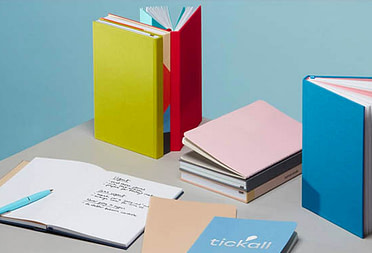
That gives physical brand products an advantage screens don’t have. People twist the Pen. Run a thumb over the paper. Open the Notebook. All those little interactions become part of how the brand feels.
There’s a sweet spot

Before you start adding lead weights to your packaging, there is a limit.
According to a report on a series of experiments, people holding a moderately heavy clipboard rated a topic as more important than people holding a lighter one. But when the weight got too heavy, the effect disappeared. So more weight isn’t automatically better. Aim for substantial, not cumbersome.
How to pass the heft test
So what does all this mean for your own brand? Here are a few things to weigh in on:
- Make the weight feel right: Heavier can feel better, but only up to a point.
- Let the materials earn it: Solid metal, thick paper and sturdy construction feel substantial for a reason.
- Think beyond the scales: Texture, finish and balance all shape how a product feels in the hand.
- Match the heft to the price tag: If something is positioned as premium, the physical experience should back that up.
- Pick it up: Specs only tell you so much. Hold it, pass it around and notice the first reaction.
Put some weight behind your brand with MOO
When somebody picks up something with your logo on it, they’re already deciding what they think of it. Might as well give them something good to hold onto.

Our Twist Pen is made from solid aluminum, so it feels satisfyingly substantial.
The MOO Water Bottle is made from double-walled stainless steel. The Hardcover Notebook has a sturdy cloth-bound cover.
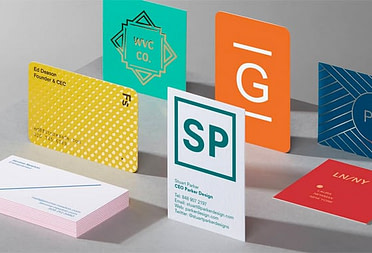
Luxe Business Cards stack four layers of Mohawk Superfine paper into one seriously weighty hello. And Super Business Cards use extra-rigid 18pt stock that’s strong, durable and non-bendy.
Explore premium Print and Branded Merch designed to look good, feel good and pass the heft test.
Keep in touch
Get design inspiration, business tips and special offers straight to your inbox with our MOOsletter, out every two weeks.
Share the post
Keep in touch
Get design inspiration, business tips and special offers straight to your inbox with our MOOsletter, out every two weeks.