Fans not customers: how sports teams build loyalty that lasts
Six lessons from the world’s biggest sports brands on building loyalty that lasts.
-
 The MOO Team

Share the post


It’s our 20th birthday this year.
And it’s got us thinking…
Why do some brands thrive and others flop? Only about half of new US businesses make it to their fifth anniversary, and 75% don’t even make it to their third.
Longevity is what every brand aims for. Becoming part of people’s lives, passed from one generation to the next.
Few organizations understand how to brand a product for long-term loyalty better than sports teams. Take baseball for example: research by Deloitte recently found that 60% of MLB fans are lifelong fans. In Spanish football, 52% of fans inherit their teams from their parents. Around the world, clubs inspire communities that span decades through shared rituals, stories, symbols, and memories.
Here are six lessons every brand can learn from the sporting world:
Key takeaways
- Build belonging, not just awareness
- Give your communities a voice
- Protect your symbols
- Share your history
- Think like a publisher
- Make keepsakes, not giveaways
#1: Build belonging
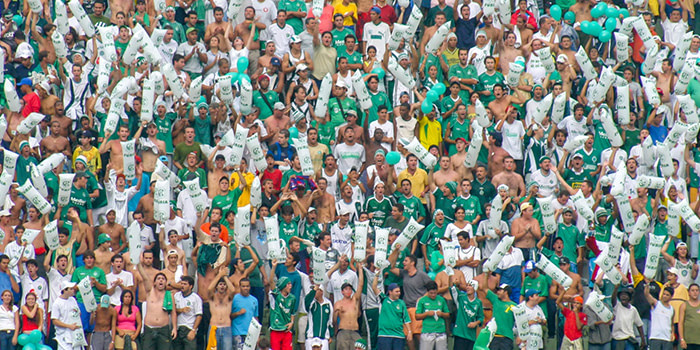
No sports fan thinks of themselves as a customer. It doesn’t matter how the relationship looks on paper; being a fan feels nothing like any other consumer experience.
The difference is belonging. Standing together in terraces, singing in unison, driving vast distances in convoy to see your team. Fandom is an identity: being a Madridista, a Cheesehead, a Gunner. A Red. A Yankee. A Cub. The team becomes a shortcut for where you’re from, who raised you, what you grew up watching and who you stood next to when it all went wrong.
These communities are forged over years of shared ritual and stubborn loyalty. The moment a club starts treating its supporters like customers, trust starts to erode.
To view this content, you must consent to our use of advertising cookies.
The strongest sports clubs understand that their role isn’t just to appeal to an audience but to create those spaces where fans connect with each other.
MOO Question: How would thinking of your audience as a community, not customers, change the way you talk to them?
#2: Give your communities a voice
Sports chants create the kind of emotional connection that marketers can only dream of. The songs that fill the terraces at Wrigley Field and the Bernabeu are not written by agencies or handed out in brand playbooks; they are created by the crowds, written by the people who sing them. The club has zero creative control.
That’s not always comfortable for brands. But trying to wrestle the narrative back from your fans is usually a losing battle and one rarely worth fighting.

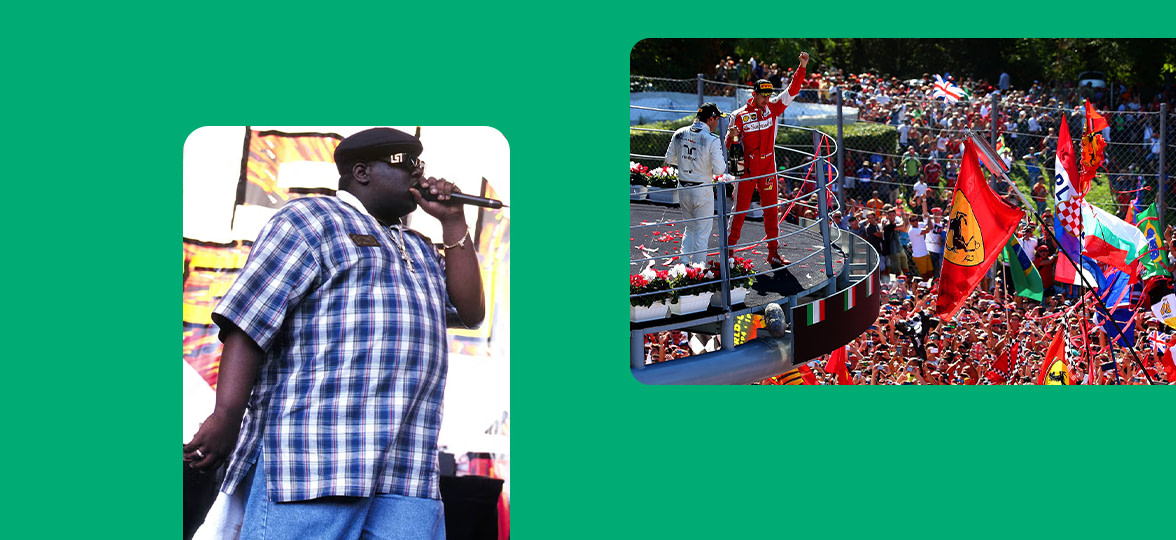
It happens outside sport too. Timberland never set out to become part of hip-hop culture. It just did. And instead of fighting it, Timberland embraced it. Sometimes your audience knows where your brand belongs before you do.
MOO question: How might it look to let your customers lead your marketing, rather than the other way around?
#3: Protect your symbols
The world’s biggest sports brands are instantly recognizable. Everyone in the world registers the all-white kits of Real Madrid, Ferrari’s red Formula One cars, the red jerseys of the Chicago Bulls. Some logos transcend their original sports to become icons in their own right.
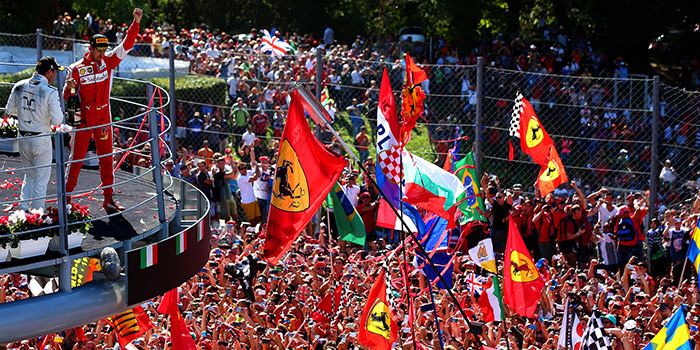
If you want to be a brand that lasts, protect your main assets. Even as players come and go, and managers and owners change, the team colors stay the same, season after season, year after year. Consistency is what keeps your identity fixed in a fast-moving world.
MOO Question: What are your key assets? And how protected are they, really?
#4: Tell the stories that make up your brand
Sports teams pull fans into a bigger story. Support Manchester United, and you inherit a story that has been unfolding for more than a century. The triumphs, the tragedies, all the years of trivia and detail somehow become your story too.
Walk around the Old Trafford Museum in Manchester or the Yankees Museum in New York, and you don’t feel like a visitor. You feel like a part of the picture.
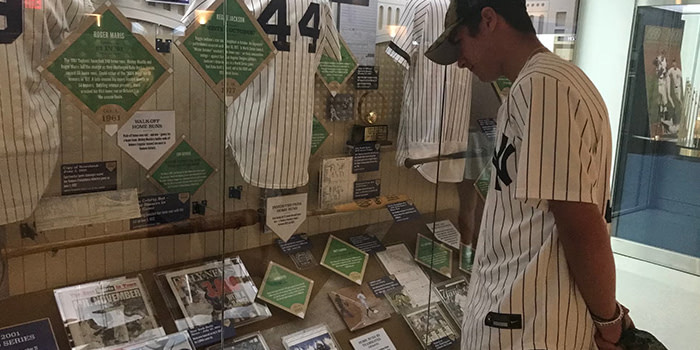
There’s a temptation for brands to be fully focused on the present and the future. The new product, the next launch, the roadmap. But if you want to build a connection with your audience, it’s important to look backward, too.
Research shows that talking about brand heritage can strengthen a brand’s identification with consumers by increasing perceptions of warmth and competence, as well as boosting the perception of credibility and nostalgia.
MOO Question: How and where might you bring your origin story to life, not just bury it on an About page?
#5: Think like a publisher
The biggest sports brands become media companies. They’ve adapted from newspapers and television to round-the-clock news sites, streaming, social media, podcasts, and behind-the-scenes content without changing who they are.
Every platform becomes another place to tell the same story. It’s a simple lesson for brands: own your narrative, create content people genuinely want, and meet your audience wherever they are.
MOO Question: How can you move across mediums without changing your message?
#6: Make keepsakes, not giveaways
Great sports merchandise isn’t really a product. It’s a way for fans to carry a memory with them: the shirt from a title-winning season, the scarf worn on freezing away days, the mug that reminds them of every Saturday morning.
These objects matter because they carry the feeling of a moment. They prove you were there. They say what you belonged to. They turn loyalty into something visible.
Too much branded merchandise is treated like a numbers game: cheaper, faster, bigger logo.
Sports teams show us a better way. Make things people actually want to keep, useful, well-made, personal, or tied to a moment that mattered.
MOO question: are you making things people keep, or things people politely take?
Aim higher, for longer
Sports teams last because they do more than attract customers. They build communities. The trophies are won on the pitch. But the real action happens in the stands.
If you’re ready to build a following that outlives you, your team, and the next five-year plan, get in touch with MOO Business Services.
We can help you with all your print, merchandise, and design questions, and help you make stuff that helps you win.
Keep in touch
Get design inspiration, business tips and special offers straight to your inbox with our MOOsletter, out every two weeks.
Share the post
Keep in touch
Get design inspiration, business tips and special offers straight to your inbox with our MOOsletter, out every two weeks.