The one place where AI can’t follow you
Sorry, AI, you can’t come in here.
-
 The MOO Team

Share the post


Between the fourth video call of the day and the AI-generated email draft waiting in your inbox, it’s easy to forget what it actually feels like to think.
We’re increasingly outsourcing that thinking to machines, and studies suggest it’s costing us more than we realize. Recent research reveals a significant negative correlation between frequent use of AI tools and our critical thinking ability.
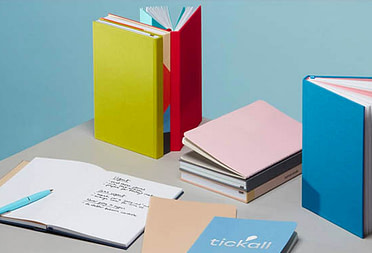
It turns out picking up a Pen and opening a new Notebook is the perfect antidote to brainrot. Where digital tools pull your attention outward, a page pulls it inwards, giving you the rare, unhurried space to actually sit with an idea rather than just react to one. The slow, deliberate act of thoughts travelling from brain to hand to page is something no algorithm can replicate.
Private, offline, and stubbornly analog. It’s time to close the laptop, hand out the Notebooks, and let your team actually think.
Key takeaways:
- AI tools learn from your behavior, feeding your inputs back into systems designed to predict and personalize. A Notebook is the only truly private space left for your ideas: no data tracking, no suggested replies, no algorithm in the room.
- Every prompt you type goes somewhere. What goes on the page stays on the page.
- Frequent AI tool use has a significant negative correlation with critical thinking ability. Writing by hand activates broader neural networks than typing, leading to deeper comprehension and retention.
- Regular writing practice is clinically shown to reduce anxiety and lower stress hormones. Journaling can reduce cortisol by up to 23% in regular practitioners.
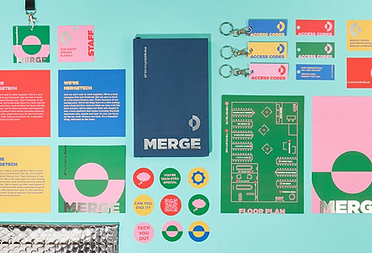
- MOO’s Notebooks and Pens are a thoughtful, on-brand gifting option for clients and employees.
Your Notebook will never sell your data
It doesn’t know your search history, hasn’t cataloged your ideas for a third party, and will never serve you an ad based on something you wrote. AI tools learn from your behavior, feeding your inputs back into systems designed to predict and personalize.

And privacy is a real concern for businesses. 97% of companies hit by AI-related data breaches lacked proper safeguards, and one in five breaches now involves AI tools. Every prompt you type goes somewhere. But with a Notebook, what goes on the page stays on the page.
Your thoughts deserve a private space, too
Psychologist Dr. James Pennebaker spent decades researching what happens when people write honestly about their inner lives. He discovered that putting difficult thoughts into words helps organize mental chaos, process emotion, and release the tension that, left unaddressed, steadily erodes both clarity and wellbeing.
But that process only works when the space feels genuinely safe. A Notebook offers exactly the privacy and safety to let you think, feel, and process your emotions on your own terms.
It forces you to think at pen-speed
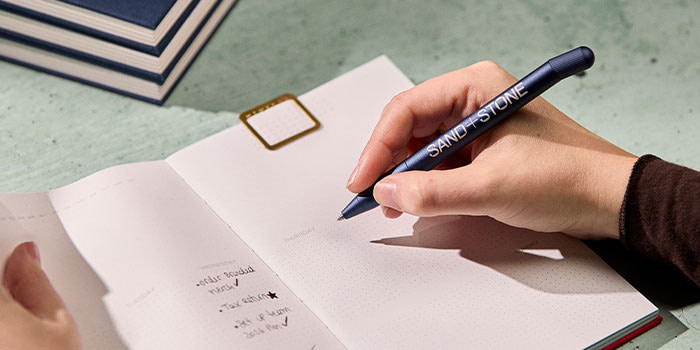
When you type, ideas pour out at roughly the speed they arrive, which sounds efficient, but often means you’re transcribing rather than thinking. But when you write by hand, you’re forced to edit in real time. To choose your words rather than simply produce them.
Handwriting slows down the note-taking process, prompting the writer to actively paraphrase and process material rather than merely transcribe it. The result is ideas that are genuinely considered and not just the first thing that comes to mind.
This is precisely what AI writing tools short-circuit. Research shows that participants who wrote with AI assistance showed lower cognitive engagement and rated their own work as less personally owned than those who wrote without it. Speed and convenience, it turns out, come at a cost to depth and originality. A Pen puts that ownership firmly back in your hands.
What AI can’t do for your brain
AI can generate a first draft in seconds, and the temptation to skip the thinking part entirely is real. The physical act of writing makes you think more carefully about what you’re capturing, and that process is where the real magic lies.
In studies comparing handwritten and laptop note-takers, it’s the handwriters who consistently outperform the laptop users on conceptual understanding. Laptop users wrote more words, but retained less.
Paper note-takers completed tasks around 25% faster than those using digital devices and remembered more of what they’d written, because a physical page holds spatial information in a way a screen simply can’t.
For business teams, this goes beyond personal productivity. In brainstorms and client briefings, there’s a reason the best ideas tend to come from the person with the Pen in their hand.
An offline cure for an online world

Screen fatigue is a well-documented physiological response to working online. Nearly 7 out of 10 adults experience symptoms of digital eye strain, including headaches, dry eyes, and difficulty concentrating – and most experience it without ever quite naming it. Add to that the cognitive load of navigating an endless stream of AI-generated content and suggested replies, and the mental cost of being ‘always on’ has never been higher.
Against that backdrop, closing a laptop and picking up a Pen is a health-conscious habit. Journaling has been proven to reduce cortisol, the body’s primary stress hormone, by up to 23%. And unlike an AI wellness app, a Notebook doesn’t track your mood, monetize your data, or send you a push notification to remind you to reflect.
For HR managers and team leads, that’s a pretty compelling case for putting a Notebook and Pen on every desk. Building dedicated offline time into the working week – whether that’s screen-free mornings, in-person brainstorms, or a simple nudge to step away from the laptop – supports employee wellbeing.
Your best thinking doesn’t need a prompt
Explore our full range of Notebooks and Pens.
And with MOO Business Services, you’ll get dedicated design support to make sure your brand looks its best on every page and pen. To get started, fill in this simple form and one of our team will be in touch shortly.
Keep in touch
Get design inspiration, business tips and special offers straight to your inbox with our MOOsletter, out every two weeks.
Share the post
Keep in touch
Get design inspiration, business tips and special offers straight to your inbox with our MOOsletter, out every two weeks.