8 ways to make brainstorms less awkward
The silence…The brain blank. The awkward eye contact. Here’s how to fix your brainstorms.
-
 The MOO Team

Share the post


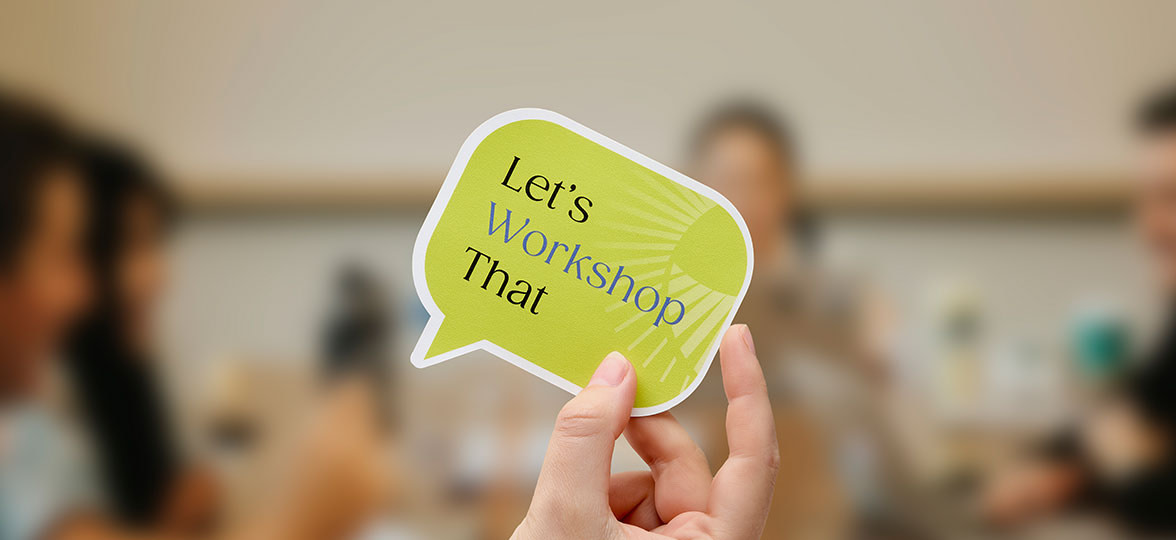
If there’s anything worse than “forced fun,” a poorly planned brainstorm has to be up there. The brain blank. The silence. The senior team member who won’t stop talking. So much awkward eye contact.
But we MOOsters love a good brainstorm because we’ve figured out how to make them feel genuinely useful rather than a badly staged improv exercise. The awkwardness usually comes from unclear expectations, too many people in the room, or an environment that doesn’t feel safe for messy thinking. Fix those elements, and you fix the session.
With the right people, prompts, environment, and mindset, brainstorming can be what it’s supposed to be: genuinely productive collaborative thinking.
Here are our eight top tips to run a killer brainstorm that generates a powerhouse of ideas and gets the most out of your people.
Table of contents
- Invite fewer people
- Bring good snacks
- Ask better questions
- Leave hierarchy at the door
- Give people time to think alone first
- Ideate in a judgment-free way
- Decide which ideas are worth pursuing
- Follow up properly
- Run a brilliant brainstorm with MOO
Key takeaways
- Keep it small – 5-7 people generate more creative solutions than larger groups.
- Bring snacks – hungry brains don’t think creatively.
- Ask specific questions like “How might we…” instead of “Any ideas?”
- Ban hierarchy.
- Start with solo thinking.
- Make it safe to share half-formed ideas – psychological safety drives better team performance.
- Use clear criteria to evaluate ideas – does it solve the problem, is it feasible, does it align with your brand?
- Vote with Stickers for a quick visual way to see which ideas have momentum.
- Always follow up and tell people what happened to their ideas within a week.
1. Invite fewer people

It seems counterintuitive, but sometimes the fewer brains and ideas in the room, the better. A packed-out room creates pressure to perform in front of peers, which is a stress nobody needs. It’s hard to think under pressure or when you feel like there are all eyes on you.
Psychologist J. Richard Hackman suggests that smaller groups of five to seven generate more creative solutions than larger ones. Beyond seven, you’re spending more energy managing personalities than generating ideas.
Invite a mix of people who can all meaningfully contribute to this specific problem, such as those with relevant expertise or those doing the work.
2. Bring good snacks
The most important and enticing part of any good brainstorm. Hungry people don’t think creatively. Their brains are too busy worrying about when lunch is happening.
It also gives people something to do during awkward pauses. Reaching for a snack is less weird than sitting in silence, staring at each other.
Make sure there’s water and plenty of coffee. The small gesture of looking after people’s basic needs signals that you respect their time and energy.
3. Ask better questions

To get good answers, you have to ask good questions. If “Any ideas?” is your prompt, then you can expect radio silence.
Specific prompts set the parameters and give people the structure to be creative within:
- “How might we reach designers who’ve never heard of us before?”
- “What would this campaign look like if we had half the budget but twice the time?”
- “What’s the version of this idea that would get us fired?”
The tighter the question, the better the ideas.
4. Leave hierarchy at the door
The most senior person in the room can kill a brainstorm just by being there. When the boss speaks first, everyone else calibrates their suggestions to what they think the boss wants to hear.
If you’re the senior person, make it explicit that you’re there to listen, not lead. Keep your thoughts to the end.
And if you’re running the session and the senior person won’t stay quiet, then gently redirect. Steer the conversation towards someone who hasn’t had a chance to speak yet.
5. Give people time to think alone first
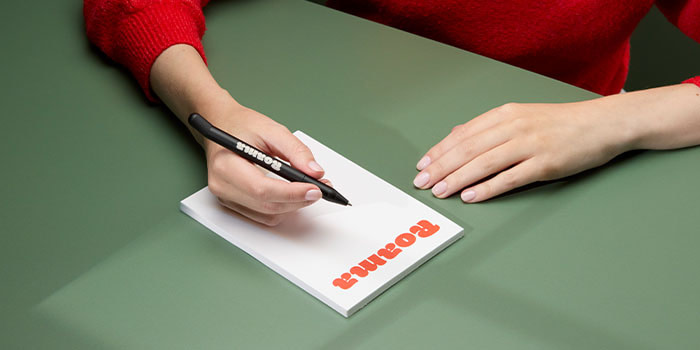
Start with five to ten minutes of solo thinking. Hand out Notepads and ask everyone to generate ideas on their own first. Include the problem you’re solving, any constraints (budget, timeline, audience), and what success looks like.
Let the extroverts scribble frantically. Let the introverts mull it over. This levels the playing field: the loud people don’t dominate immediately, and the quieter people have space to develop their thoughts.
6. Ideate in a judgment-free way

Once everyone’s had time to think, ask them to write their strongest ideas on Postcards—one idea per card—and stick them on the wall.
The goal here is to get ideas flowing without evaluating or critiquing. Psychological research shows teams perform better when people feel safe taking interpersonal risks. In brainstorming terms, that means feeling safe suggesting a half-formed idea without being shut down.
Once you have everything down, take a breather. Grab lunch. Let your brain reset.
7. Decide which ideas are worth pursuing
Once everyone’s had a break, it’s time to evaluate. Use clear criteria to assess each idea:
- Does this solve the actual problem?
- Is it feasible with your resources?
- Does it align with your brand?
Avoid dismissing anything that feels “too weird.” Some of the strongest concepts come from venturing into the unexpected.
If you’re leading the session, aim to put a positive spin on the language used:
- “Interesting. What if we pushed that further?” vs. “That won’t work.”
- “Building on that, what about…?” vs. “We tried that before.”
Give everyone a few Stickers and ask them to place them next to the ideas they find most promising. You’ll quickly see which ideas have legs.
8. Follow up properly
Nothing kills future enthusiasm faster than spending an hour brainstorming, only to hear nothing. It can make people feel like their contribution didn’t matter.
Within a week, send a follow-up. Print can help it land properly. A Flyer on someone’s desk feels more intentional than another chain email. A simple handwritten message can close the loop:
“Here’s what we’re taking forward and why. Your input made the work better. Thank you.”
It shows respect for people’s time. And it makes them more likely to contribute enthusiastically next time, because they know their ideas actually go somewhere instead of disappearing into the void.
MOO has everything you need for a brilliant brainstorm

From Notepads, Notebooks and Postcards for capturing ideas to Stickers for voting on the best ones, we’ve got the physical tools to make your brainstorm actually work. Discover our brainstorming essentials.
For brands looking for expert support, MOO Business Services provides dedicated account management, custom design assistance, and streamlined ordering. To get started, fill in this simple form, and one of our team members will be in touch soon!
Keep in touch
Get design inspiration, business tips and special offers straight to your inbox with our MOOsletter, out every two weeks.
Share the post
Keep in touch
Get design inspiration, business tips and special offers straight to your inbox with our MOOsletter, out every two weeks.