Teach what you hate (and other weird ideas for employee engagement)
Three team-building ideas you haven’t tried yet.
-
 The MOO Team

Share the post


Most employee engagement content tells you the same things. Connect more. Communicate more. Book a team lunch. Try an escape room. Do the quiz.
But you’ve done all that. It’s time to try something that might make your team a little uncomfortable.
Here are three activities designed to get your team squirming in their seats, fire up creative thinking, and make it safe to be the one who doesn’t have all the answers.
Key takeaways
- Vulnerability bonds teams more effectively than shared competence.
- Boredom is one of the most powerful drivers of creativity, but we’ve quietly engineered it out of the workplace.
- Silent formats level the playing field in meetings, giving quieter team members space to contribute.
Teach what you hate
Instead of skill-sharing sessions where everyone teaches their strengths, organize oneS where everyone teaches something they’re genuinely bad at.
The CFO runs a yoga session. The designer attempts to explain a spreadsheet. The operations lead gives a five-minute talk on watercolor painting. Making things uncomfortable is the aim of the game.

What this kind of session does is dissolve hierarchy in a way that a team lunch simply can’t. It makes it safe to be a beginner, which is rarer in most workplaces than it should be.
Being bad at things makes you more likable
Researcher Brené Brown has spent decades studying what actually brings people together. She found that vulnerability is the birthplace of connection. It’s in those less-than-polished moments that we can truly see the other person.
There’s science behind the awkwardness, too. Psychologist Elliot Aronson called it the pratfall effect: people who demonstrate occasional incompetence are actually rated as more likable than those who appear consistently flawless.
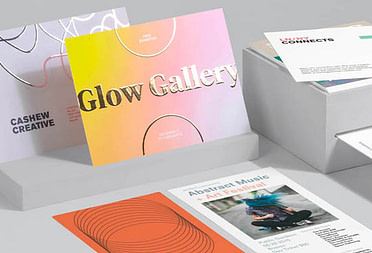
MOO idea: to kick things off, try a round of prompt Postcards. Hand each person a card with a prompt to get the confessions flowing. Here are some awkward thought-starters:
- “The last thing I Googled how to do was ___.”
- “Something I’ve pretended to be good at for years is ___.”
- “A skill I’ve always claimed to have but definitely don’t is ___.”
- “The task I pass to someone else every time is ___.”
- “___ is something I hate doing.”
Experiment with boredom
Boredom has been engineered out of the workplace, but it’s one of the most powerful drivers of creativity. It may feel uncomfortable at first, but that’s when people start talking, and ideas start flowing.
Being bored is good for the brain
Our brains need downtime, but technology means they rarely get a chance to switch off. And the constant stimulus is having an impact.
One study shows that people who completed a mundane task significantly outperformed others on subsequent creative challenges. That’s because a bored, wandering mind makes the kind of lateral, associative leaps that a focused, task-oriented mind struggles with. Neuroscientists call the network responsible for this the Default Mode Network, which only activates when your brain takes a break.

MOO idea: go fully analog with an afternoon with no agenda, no screens, no tasks. Send everyone away with a Pen, a Notebook, and some Stickers. Encourage them to doodle and write things down. Who knows what they might come up with?
Host some silent activities
Silent retreats are having a moment. Some centers are reporting a 25% increase in attendance as people try to escape digital overload. Silent retreats are about reducing stress, enhancing clarity, and deepening our connection to ourselves and our place in the world.
But silence isn’t just good for the individual. It’s also one of the most underrated tools for bringing teams together, too.
Some people think better quietly
Not everyone thinks out loud. And most workplaces are built for the ones who do. Research shows that disagreeing in a group triggers the same part of the brain as physical pain, which can explain why so many people simply avoid disagreement. Give people silence and space to think rather than react, and the quieter voices in the room finally get a look in.
MOO idea: you don’t need to head off to a retreat to bring silence into your team’s routine. Start small with a few low-pressure formats that give everyone a chance to think before they speak. A Notepad at every seat is all the kit you need.
Here are a few quiet (and creative) ways to connect:
- Try a brainstorm where the first 20 minutes are spent entirely on paper.
- Do a quiet icebreaker where no one speaks. They just write their responses down.
- Have a “notes only” check-in at the start of a meeting.
- Plan a Friday wind-down where everyone scribbles three things before they head out the door.
MOO brings all your weird team-building efforts to life
Notebooks for the boredom experiment. Postcards for the awkward icebreaker. Notepads for the meeting nobody spoke at. Whatever you’re testing, MOO has the analog tools to make it work.
Keep in touch
Get design inspiration, business tips and special offers straight to your inbox with our MOOsletter, out every two weeks.
Share the post
Keep in touch
Get design inspiration, business tips and special offers straight to your inbox with our MOOsletter, out every two weeks.