How your brand survives the digital apocalypse
The internet’s more fragile than you think. Your brand doesn’t have to be.
-
 The MOO Team

Share the post


Here’s a thought exercise for you: what if a solar storm wiped out the internet overnight? Just one cosmic tantrum from the sun, and every pixel you’ve ever paid for vanishes.
Dramatic? Maybe.
Impossible? Absolutely not.
The internet is more fragile than we’d like to admit – and brands have put almost all their eggs in one increasingly precarious basket. Brands now allocate 73% of their total advertising spend to digital channels.
We’ve built entire business models on infrastructure we don’t control. The marketing ecosystem depends on continuous power, functioning servers, stable networks, and platforms that stay online. Remove any one of those variables, and you’re shouting into the void.
So here’s the question: if the internet died tomorrow, would your brand still exist?
Key takeaways:
- Brands allocate 73% of their advertising budgets to digital channels that could vanish overnight.
- When Meta’s platforms crashed in 2024, over 500,000 users reported outages. Businesses that existed only online simply didn’t exist.
- 81% of Gen Z and 78% of Millennials wish they could disconnect from digital devices more easily.
- Direct mail has a 90% open rate compared to email’s 20-30%.
- Print requires 21% less cognitive effort to process than digital, and people are 70% more likely to recall brands from print ads.
- The strongest strategy incorporates both digital and physical.
What happens when the internet goes down?
You don’t need a solar storm to see what the apocalypse looks like. We’ve already had the rehearsal.
March 2024: Meta’s platforms (Facebook, Instagram, and Threads) went dark for over two hours. At the peak, over 500,000 users reported outages. People were locked out. Brands couldn’t access their Ad Manager. The hashtags #InstagramDown and #FacebookOutage trended on X (because apparently we need one working social platform to complain about the broken ones).
December 2024: it happened again. More proof that the infrastructure holding up your entire brand presence is about as stable as a house of cards in a hurricane.
Here’s what those outages revealed: we have no backup plan
When Meta’s servers went down, brands that existed exclusively online simply… didn’t exist.
For many businesses, these platforms are their whole marketing strategy. And when the strategy goes offline, so does everything else.
That’s where print comes in. Unlike pixels on a screen, print is something you can physically hold in your hand. And it’s got an offline presence that survives server crashes, platform outages, and collective digital exhaustion.
Print: the apocalypse-proof technology
While everyone’s obsessing over the next AI tool or algorithm update, print just is what it is. It can’t be hacked, deleted, shadow-banned, or rendered obsolete by a server fire.
Print’s physical, tactile nature is refreshing in an era of digital fatigue. 81% of Gen Z adults and 78% of Millennials often wish they could disconnect from digital devices more easily.
Print requires 21% less cognitive effort to process than digital – and people actually absorb what you’re saying, instead of just scanning and scrolling.
They remember you, too. In fact, people are 70% more likely to recall a brand from a print ad than a digital one.
Print cuts through because it occupies an entirely different dimension. Direct mail has a 90% open rate compared to email’s 20-30%. You can’t scroll past analog marketing, nor does it vanish when the server goes down.
Building your analog arsenal
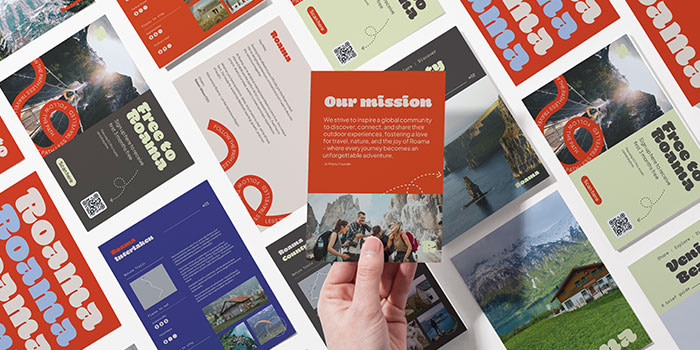
Look, we’re not saying abandon digital. That would be absurd. But building an entire brand on platforms you don’t control comes with risk. You can, however, bridge the analog/technological gap by using physical and digital in tandem.
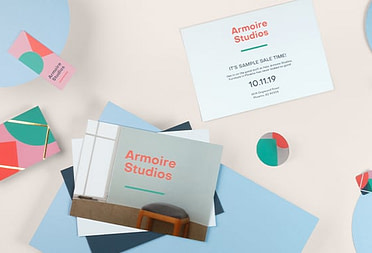
A Postcard drives someone to your website. A QR code on a Business Card connects to your LinkedIn. A Sticker on a laptop reminds someone to check your Instagram.
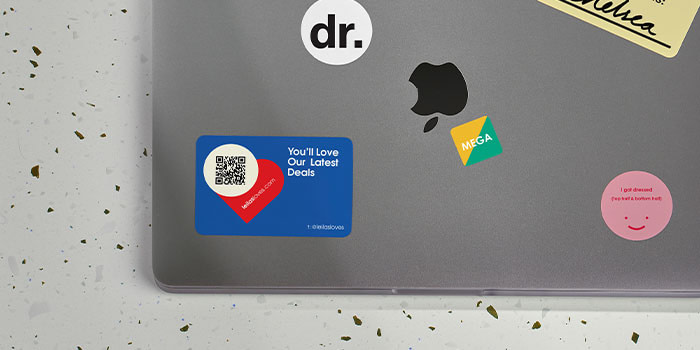
The physical stuff creates the first impression, the trust, the tactile memory. The digital stuff handles the follow-through. Neither works best in isolation.
Here’s how to keep your brand tangible and not solely reliant on servers:
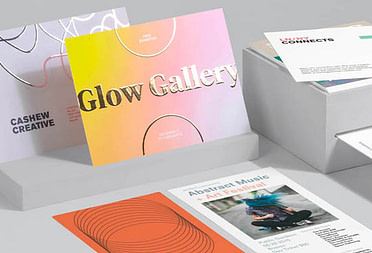
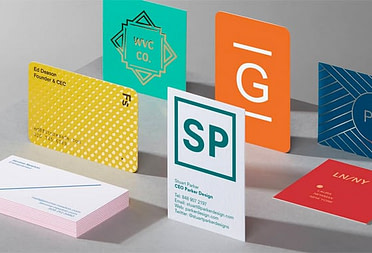
- Start with the essentials: Business Cards for networking. Postcards for outreach. Flyers explaining what you do. Brochures showcasing your products or services. Stickers for visibility in physical spaces. Branded Notebooks for keeping your name in someone’s hand. Build the physical toolkit that makes your brand tangible and independent of servers.
- Think beyond paper: Branded Merch moves through physical spaces with your logo on it. No wifi connection required.
- Design for keeping: Digital content lasts a nanosecond. Print should be worth holding onto. Use quality materials that people actually want to keep, like MOO’s paper stocks and Special Finishes. These create tactile experiences that quick digital ads can never replicate.
- Distribute thoughtfully: Coffee shops. Co-working spaces. Offline networking events. Anywhere humans gather IRL. Make your brand present in physical spaces, not just digital feeds.
- Bridge both worlds: QR codes connect offline materials to online experiences (when the internet’s working). But don’t forget: include contact details that work offline, too. Phone numbers. Physical addresses. Information that exists independent of functioning servers.
Prepare your brand for Doomsday. Then relax.
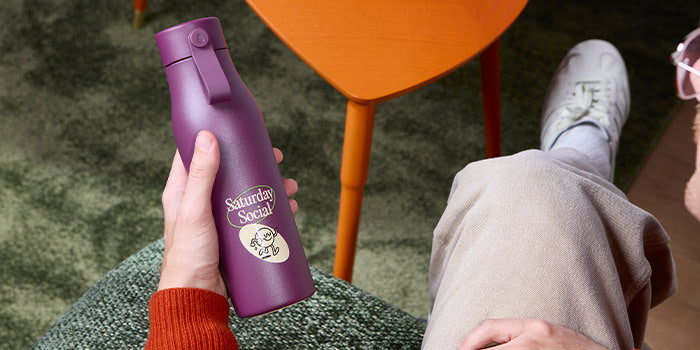
The apocalypse scenario is useful as a thought experiment, but here’s the real point: you don’t need a solar storm to justify building an offline presence. Explore MOO’s full range of Marketing Materials, and start creating print that connects beyond the screen.
You can also browse MOO Business Services to kit out your team with branded materials that exist in the real world. Just fill in this simple form, and a member of our team will be in touch shortly.
Keep in touch
Get design inspiration, business tips and special offers straight to your inbox with our MOOsletter, out every two weeks.
Share the post
Keep in touch
Get design inspiration, business tips and special offers straight to your inbox with our MOOsletter, out every two weeks.