What happens to your brain on your first day at work?
Share the post


Most onboarding programs focus on the practical stuff. And while HR handles the admin, the new starter’s brain is deciding whether they belong here. Beyond the passwords and policies, the laptops and lanyards, onboarding is about inviting someone into your tribe.
Belonging is critical. In fact, 79% of employees who feel a sense of belonging have no plans to leave.
Discover what’s actually happening in a new starter’s brain on day one, why building a sense of belonging in the workplace is a neurological necessity, and how the right onboarding experience can set the tone for everything that follows.
Key takeaways
- Belonging is biological. The brain processes social exclusion the same way it processes physical pain.
- Day one does more psychological heavy lifting than any other day at work. Primacy bias means it sets the tone for everything that follows.
- Confirmation bias means new starters are actively looking for evidence that they made the right call.
- Physical things leave a deeper footprint in the brain than digital ones ever could. Use that to make new starters feel like they belong.
Belonging is biological
Long before job titles and Slack channels, humans lived in tribes. Food, shelter, protection – all of it depended on staying in the group. Belonging meant survival.
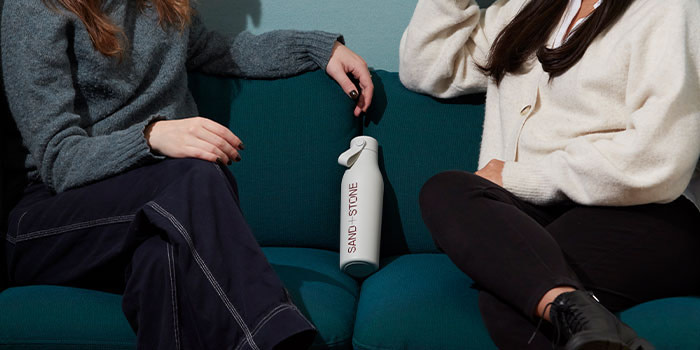
And even though life is very different now, that neurological wiring hasn’t changed. Neuroscience shows that social exclusion activates the same neural pathways as physical pain. Your brain doesn’t really distinguish between a broken bone and being left out of the lunch run.
This means walking into a new workplace with unfamiliar faces and unwritten rules is a big deal. The brain’s threat detection system is scanning for social cues, reading faces, and assessing hierarchy. That takes a lot of brainpower.
The faster you move someone from uncertain to settled, the faster they become the employee you hired them to be.
From outsider to insider
People may take jobs for the perks and the brand, but research consistently shows they stay for their coworkers. But that sense of belonging doesn’t happen automatically. It has to be built.
Within the first few weeks, a new employee is unconsciously asking one question: “Do I belong here?” Everything from their induction to their very first meeting feeds into that answer. Get it right, and you move someone from ‘new here’ to ‘one of us’ faster than any policy document ever could.
How behavioral science can redesign onboarding
HR teams who understand how the brain processes new experiences can use that knowledge to design onboarding programs that work with human nature.
Primacy bias: front-load the good stuff
Primacy bias is our tendency to remember and attach more weight to the first information we encounter. It’s why first impressions stick.
It’s also why your first day at a new job sets the tone for everything that follows. A chaotic, impersonal onboarding experience sets an anchor. The brain will keep returning to that first impression, using it as a reference point for how things work.
Use primacy bias to your advantage by creating a standout onboarding experience that they’ll refer back to again and again.
Confirmation bias: write the story before they do
Once we’ve formed a first impression, we look for evidence to confirm it. Confirmation bias means that a new starter who feels welcome on day one will actively notice the things that reinforce that feeling: the friendly colleague, the well-stocked kitchen, the Notebook on their desk with their name on it. The opposite, of course, is also true.
HR teams have a narrow window to write the story a new employee will tell themselves (and others) about the company. It’s worth getting it right at the beginning.
Why physical objects make onboarding feel real
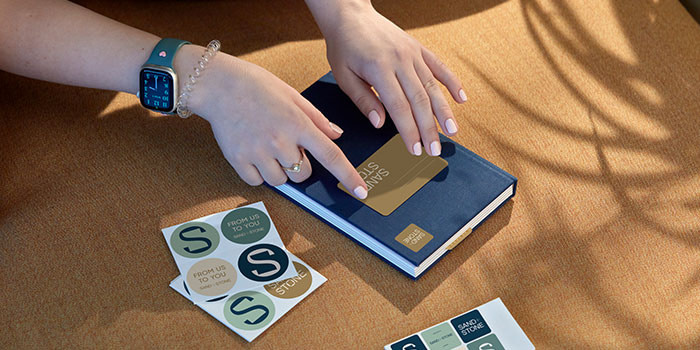
There’s a reason a handwritten message on a Notecard resonates differently than a generic email. A study using fMRI scans found that physical materials leave a deeper footprint in the brain, involving more emotional processing and creating stronger memory and brand associations than digital equivalents.
Behavioral science shows that physical objects engage more of our senses – touch, sight, even smell – which makes them easier to remember and more emotionally resonant.
There’s also the endowment effect, which shows we place higher value on things we physically own and can hold. In one study, holding an object for just 30 seconds increased its perceived value by 37%.
Handing a new starter a physical object, such as premium Branded Merch or custom Stationery, gives them somewhere to belong.
You’ve got one shot at a first impression
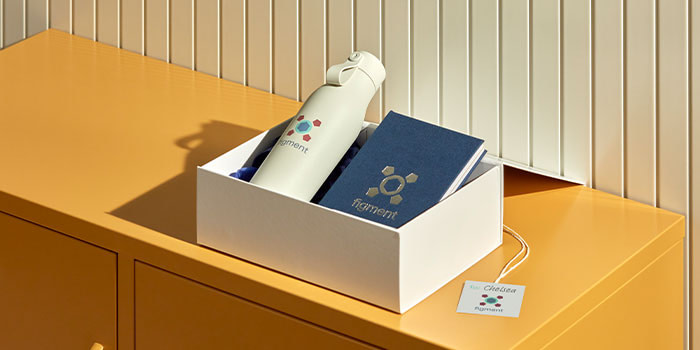
MOO can help you make it count.
Browse our range of new Starter Kits. And leave the Print and Branded Merch to our Business Services, so your onboarding runs like clockwork. To get started, fill in this short form and our team will be in touch shortly.
Keep in touch
Get design inspiration, business tips and special offers straight to your inbox with our MOOsletter, out every two weeks.
Share the post
Keep in touch
Get design inspiration, business tips and special offers straight to your inbox with our MOOsletter, out every two weeks.


