Whatever happened to beauty?
The world got beige. Your brand doesn’t have to.
-
 The MOO Team

Share the post


Cast your eye across a high street, a supermarket shelf, or spend five minutes scrolling.
Notice anything?
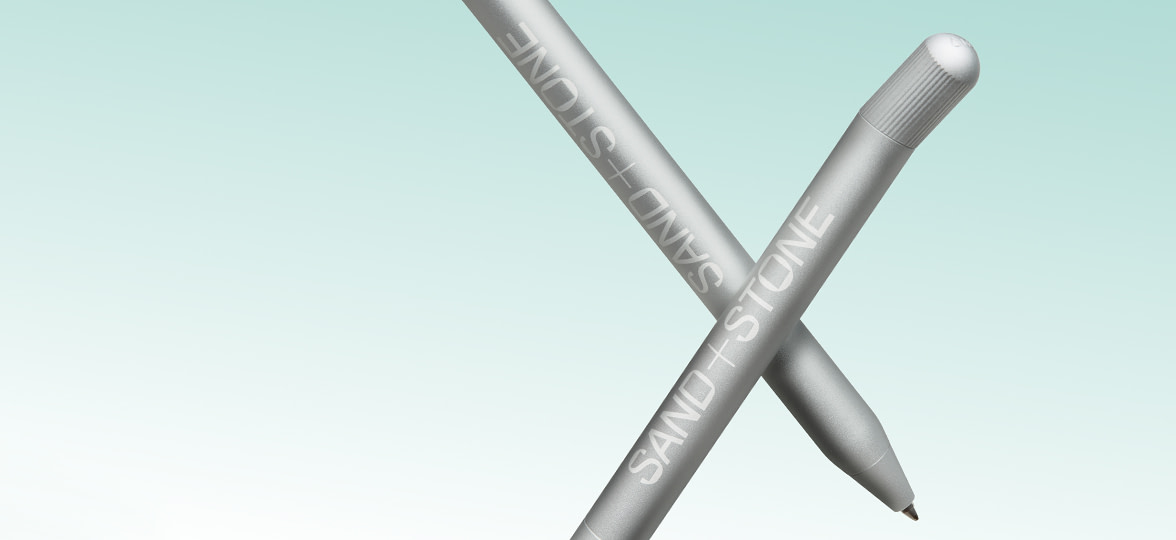
Everything looks the same. A bit flat, a bit beige. The logos that used to feel bold and alive have been flattened into something forgettable. The shopfronts have generic sans-serif signs where there was once gilded lettering.
When it comes to making things beautiful and detailed, we’ve collectively lowered our standards. As philosopher Roger Scruton says, “Beauty is vanishing from our world because we live as though it does not matter.”
This is a case for why it does – and why we need to bring more beauty back into our world (and into our brands).
Key takeaways:
- We’ve collectively lowered our design standards, and it’s showing up everywhere, from our buildings to our brands.
- Ugly has a measurable cost. Poor design affects how people think, feel, and behave.
- Poor quality, generic design, and AI shortcuts don’t go unnoticed.
- Beautiful design is what makes brands memorable, trusted, and worth holding onto.
A brief history of the beautiful everyday
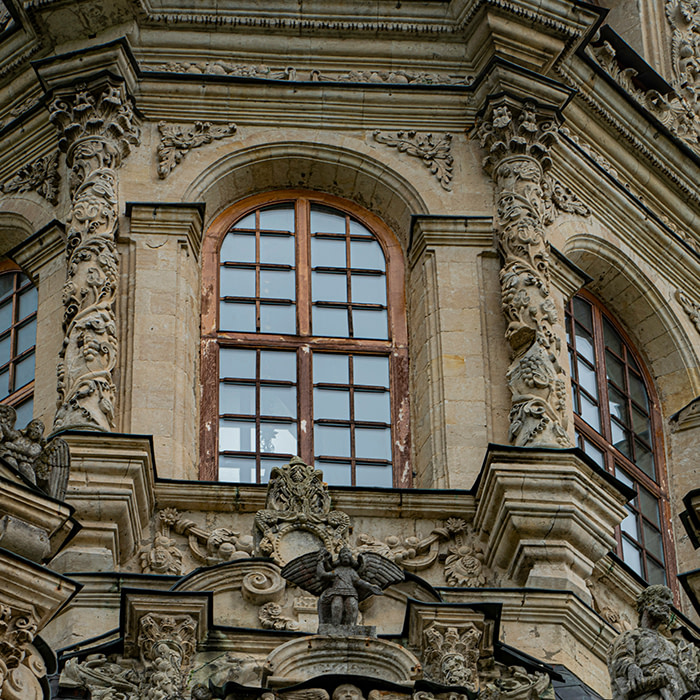
There was a time when even the unseen things were made with care. Take the Victorians. They understood something genuinely profound about the relationship between beauty and civic pride. They built pumping stations with tiled halls, ornamental brickwork, and vaulted symmetry, because they believed public utilities deserved to be beautiful, too.
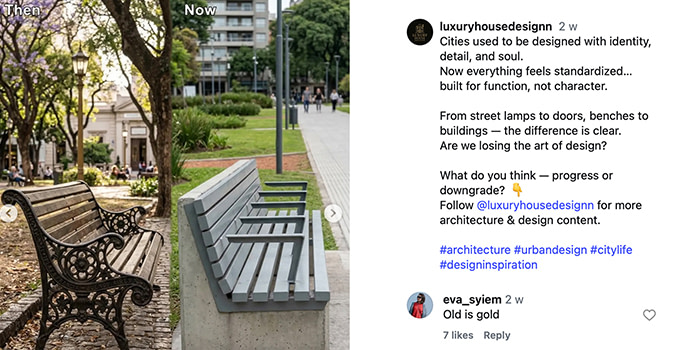
And it wasn’t just architecture. Public benches were cast iron scrollwork and curved wooden slats. Street lamps had glass lanterns with a warm glow and decorative metalwork. Books were bound with embossed covers and illustrated endpapers. Clothing was tailored, lined, repaired, and passed down.
Beauty wasn’t a luxury – it was the baseline.
The end of beauty
But then the world turned ugly. There were two World Wars in the space of 30 years, with an economic depression sandwiched betwween. Materials were rationed, budgets gutted, and beauty started to feel like something the world couldn’t afford. Function stepped forward while ornamentation stepped back.
By the time consumer goods flooded back in the 1950s and ‘60s, the logic had hardened. Mass production rewarded what was cheapest and fastest to make. Plastics replaced iron. Synthetic fabrics replaced wool. Particleboard replaced solid wood. Handmade details and individual flourishes became unfashionable and costly. Minimalism was recast as sophistication, and the stripping away of beauty was dressed up as progress.
Ugly has a cost (and it’s higher than you think)
Beyond aesthetics, beauty (or lack of it) has measurable effects on how we think, feel, and behave.
Back in the 1950s, psychologist Abraham Maslow set up a simple experiment: three rooms, one beautiful, one neutral, one downright ugly. Participants judged a series of photographs while sitting in each. The people in the beautiful room gave significantly more positive responses, while those in the ugly room were notably more irritable, tired, and prone to complaining. That’s how quickly our environment gets under our skin.
Your brand is an environment, too
The same principle applies to every space you put your brand out into the world. People make judgments about brands the same way they make judgments about rooms.
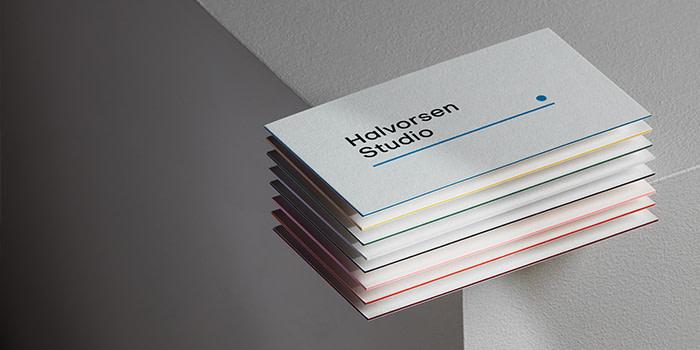
A logo that’s been flattened into a generic sans-serif. A flimsy business card or cheap flyer that immediately ends up in the recycling. These things create an impression, whether you intend them to or not. Walk into a beautiful space, and you sense it immediately. Hand someone a beautifully made Luxe Business Card, you get that same good feeling.
What happens when business stops caring about beauty
The same forces reshaping the visual world are reshaping brands. Here are some ways a lack of detail is impacting your brand:
- Everyone looks the same. The template economy has democratized design, making it more accessible than ever. But it has also diluted identity. When a realtor and an artisan baker are indistinguishable, you’ve got a branding problem.
Quality slips. Branded Merch is a physical object that carries your brand into someone’s daily life. And people notice, with 72% saying the quality of that product directly reflects the reputation of the business behind it. Cheap merch gets thrown away, and takes your brand reputation with it. - AI replaces human connection. Touted as more efficient, AI-generated content is flooding brand channels with mediocre (and creepy) imagery. Outsourcing your creative to AI might save you money in the short term, but you’re trading away the one thing that actually makes people pause and notice: the beautifully imperfect humanness of it all.
Making brands beautiful is good business sense
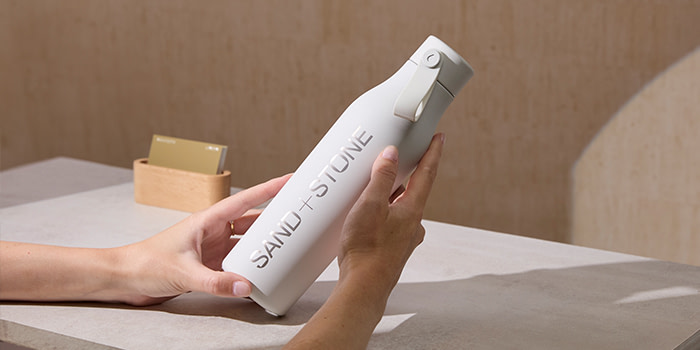
Investing in beautiful design can feel like a luxury – something you do when the budget allows – while the important stuff is taken care of. But beauty is the important stuff. As Roger Scruton says, “Put usefulness first, and you lose it. Put beauty first, and what you do will be useful forever.”
Where form meets function
Beauty and function shouldn’t be in competition with each other. And we believe that you can’t have one without the other. Give someone a Letterpress Business Card, and people can immediately feel the care and attention to detail. Pick up an award-winning MOO Twist Pen and they will notice the difference as it moves across the page.
MOO makes brands beautiful. Discover our Print, Branded Merch, and Stationery.
Keep in touch
Get design inspiration, business tips and special offers straight to your inbox with our MOOsletter, out every two weeks.
Share the post
Keep in touch
Get design inspiration, business tips and special offers straight to your inbox with our MOOsletter, out every two weeks.


