What is a brochure and how to use it for your brand
Find out why brochures still matter, how to make them, and how to get them seen.
-
 The MOO Team

Share the post


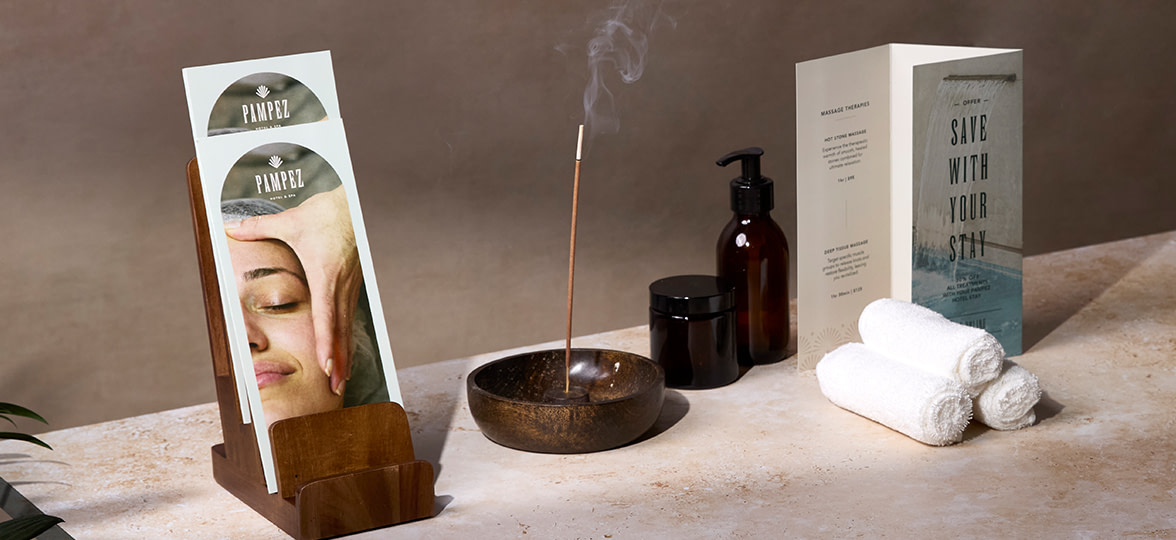
If you think Brochures are an outdated marketing tool of the past, it’s time to think again. Brochures are still one of the easiest, most effective ways to get your message into people’s hands (literally).
But what is a brochure, and how can forward-thinking businesses use brochures to get more eyes on their brand?
Read on to find out why the humble brochure will never go out of style and how you can make it work hard for your brand.
Table of contents
- What is a brochure?
- Breaking down the different types of Brochures
- How to choose a brochure size
- How to choose a finish
- Flyers vs. Brochures
- The low-down on creating an epic brochure
- Creative ways to use a brochure in your business
- How to get your brochure out there
- Brochures that go beyond the basics
- Frequently Asked Questions
What is a brochure?
When you picture a brochure, you probably see a glossy piece of sales collateral that gives people a basic snapshot of your products or services. But for discerning brands, brochures can be a carefully crafted storytelling tool. Usually folded into sections, it’s designed to be eye-catching, informative, and physically represent your business. Brochures offer detailed information about your brand, its products, services or all of the above. They share the brand’s values, mission statement, corporate identity and overall vision.

Breaking down the different types of Brochures
Tri-fold Brochure
Versatile and timeless, the Tri-fold Brochure is a marketing staple. Featuring three sleek panels and two creases it’s ideal for sharing large amounts of information without compromising on design, the message or the reader’s experience.
Bi-fold Brochure
Practical and high impact, the Bi-fold Brochure features two large panels with one crease in the middle. It’s a great option for image-heavy content, if you’d like to take a minimal approach or would just like your information to have some breathing room.
Z-fold Brochure
Structured and surprising, the Z-fold Brochure opens accordion-style across three creases into six panels. A good format for step-by-step guides, product walkthroughs, or content that builds naturally from one section to the next.
How to choose a brochure size
Choosing a Brochure size can be tricky. But, focusing on the overall purpose of the Brochure will help determine its size.

3.67″ x 8.5″
This size is often used for Z-fold and Tri-fold Brochures. For Z-fold Brochures this size is a staple because it allows the information to be revealed one panel at a time, across 6 panels. It creates an interactive experience and is great for step-by-step instructional guides, how-to guides, timelines and product journeys.
For Tri-fold Brochures, this size comes in handy as the information can be separated into three separate sections. This size is often used for Marketing and sales Brochures, tourism and travel guides, event guides or service menus for professional services like massage parlours or hair salons.
5.5″ x 8.5″
If you’re looking for something to hold a lot of information, but would still like the Brochure to have room to breathe, this is the best option. This size is often used for Bi-fold Brochures and are great for restaurant menus, event programs, product catalogs, portfolios and lookbooks, and they’re great as company brochures.
How to choose a finish
Once you’ve settled on size and fold, there’s one more choice worth taking your time over: the finish. The finish changes how your Brochure feels in someone’s hands, and that’s part of how it represents your brand.
Eco Signature
Uncoated, with a soft resistance under the fingers. Look closely and you’ll catch subtle speckles through the fibers – a natural quality of 100% recycled stock that gives each piece its own character.
Soft Touch
Smooth and velvety, with a finish that feels almost cushioned. Made on Super stock with lamination on both sides.
Matte
Smooth and non-reflective, with a silken feel. Works well for detailed information, image-led layouts, and anything that benefits from a refined finish.
Gloss
High-shine and solid in the hand. Colors look their sharpest, images look their brightest. A natural fit for bold, graphic designs..
Flyers vs. Brochures
The lines are often blurred between Flyers and Brochures. But, their uses are actually very different and if done correctly they can have a massive impact.

Flyers are the best for short-form content like a sale or event announcement. They can also be used to create momentum and drive traffic to your brand’s social media, website or any other platform.
Here are a few ways to use Flyers:
- Limited time vouchers
- Brief reference guides or checklists
- Coupon codes
- To launch a product or service
- To showcase a unique, once-off design
- An overview of your brand’s main products or services
You can also get creative with how you distribute your flyers for maximum impact.
Brochures are more in-depth, offer context and the ‘why’ behind the message.
The low-down on creating an epic brochure

Whether you’re asking yourself what is a brochure’s main purpose, or how to get creative with it, the answer is its versatility. A good brochure balances design and information, drawing people in while giving them exactly what they need to know. Here are a few design tips:
1. Eye-catching front cover
Your cover is your first impression, so it needs to stand out. Use bold visuals, a clean layout, and a clear headline that grabs attention. Keep it simple but intriguing, something that makes people want to open it up and learn more.
2. Concise information
Your brochure should answer the basic questions:
- Who you are
- What you’re offering
- Where to find you
- Why it matters
Stick to short, punchy sentences that deliver the key points. Too much text can make your brochure feel cluttered, so focus on the essentials and let the design do some of the talking. Remember to use an easy-to-read font that gets the message across easily.
3. An obvious panel structure
Each panel should have a clear structure and purpose. Breaking up each panel into sections and making sure the content flows makes the brochure easy to read.
4. Clear CTA
Don’t leave people guessing about what to do next. Include a clear and inviting call to action that directs them to take the next step, like visiting your website or booking an appointment.
5. Striking visuals
Choose images or illustrations that align with your brand’s style, such as product shots to highlight what you’re selling or infographics to simplify complex information. A good rule of thumb is to let visuals take up at least half the space on each page so the content is easier to skim.
6. Added extras for interaction
Take your brochure to the next level by adding interactive elements such as QR codes that link to a product or coupons that customers can redeem in-store. These extras make your brochure more engaging and give readers a reason to hold onto it.
7. Practical details
Don’t forget the nitty-gritty details that people will look for, such as:
- Contact information (phone number, email, physical address)
- Business hours (if relevant)
- Social media handles
- A small map or directions for in-person visits
Creative ways to use a brochure in your business

Forget what you know about Brochures. With some outside-the-box thinking, you can transform your brochure from standard to stand-out.
- Welcome packs: Brochures add a personal touch to welcome packs for new customers or employees. For customers, introduce your brand’s story, values, and products. For employees, outline company culture, team roles, or perks to help them feel connected from day one.
- Event programs: Use brochures as event guides with maps, agendas, speaker bios, or note sections. Perfect for conferences, festivals, or retreats, they’re practical and reinforce your branding.
- Mini catalogs: Showcase product lines or seasonal collections with high-quality images and pricing. Pair with QR codes for direct online shopping.
- Educational guides: Create helpful resources that help build trust and position your brand as an expert.
- Seasonal gift guides: Create holiday-themed brochures featuring curated gift bundles or recommendations to inspire purchases and highlight your products.
How to get your brochure out there
Even the most beautiful or innovative brochure won’t work if it doesn’t reach your audience. Here are some simple ways to distribute them:
- Local partnerships: Partner with businesses that complement yours. For example, a boutique hotel might display brochures for a nearby artisanal bakery. This mutual exposure helps both brands reach a shared customer base.
- Events and trade shows: Events are classic spots for brochure distribution. Pair your brochures with other materials like Business Cards or Branded Merch to make your booth unforgettable.
- Product inserts: Adding a brochure to your product packaging is a brilliant way to share more about your brand or offer exclusive deals. You can use Eco paper, which is uncoated and easy to add a personalized, handwritten note on.
- Direct mail campaigns: Wondering what is a brochure’s value in this digital age? Sending them directly to potential clients can add a personal touch and stand out in a sea of digital ads.
- In-store displays: If you have a physical store, create a prominent display for your brochures. Include a call to action, like a QR code that links to a special offer or digital catalog.
- Premium handouts: Go with Soft Touch Brochures for occasions where you want your print to reflect your positioning. Investor events, new client introductions, senior leadership gatherings. These are the moments when you want someone to pick up your brochure and immediately notice the sensation before they read it.
Brochures that go beyond the basics
Ready to take your marketing to the next level? Explore MOO’s custom Brochures and discover how MOO Business Services can help. To get started, fill out this simple form, and one of our team members will be in touch shortly.
Frequently Asked Questions
What type of paper should I use?
MOO’s premium Matte Paper is 80lb (225gsm) and features a silken, natural finish. This is useful if you want a more refined, polished look or if you want to share detailed information as it’s not as reflective as Gloss paper.
MOO’s Gloss Paper is 100lb (250gsm) with a glossy finish, perfect for bright colors and making a statement. It’s also very sturdy and will feel solid in the reader’s hands.
MOO’s Eco Signature paper is 100% recycled and uncoated, with a tactile texture and subtle speckles through the fibers. A good fit for sustainability-led brands and higher-volume runs.
MOO’s Soft Touch finish is applied to Super stock with lamination on both sides, giving the Brochure a smooth, velvety feel. Well suited to premium brand positioning.
What is the standard size for a Brochure?
The most common Brochure size is 8.5″ x 11″ (US Letter size). Another common size is 8.5” x 14”, which adds a bit more length to the brochure, while 3.67″ x 8.5″ is a great fit for Z-fold and Tri-fold Brochures.
What fold type should I choose?
This depends on the amount of information you’d like to share and the purpose of the message. If you’re leaning towards more information the Tri-fold is a great option as it has three panels. If you’d like a more minimal approach without the brochure being cramped, the Bi-fold is ideal. For content with a natural sequence to it, the Z-fold opens across three creases into six panels. Good for step-by-step guides, product walkthroughs, or anything that builds from one section to the next.
What is the “bleed zone”?
This is a printing term that refers to the edge of the paper and how it is cut or printed. The bleed zone is basically the area on the paper which the printer cannot reach, which means it can’t print on that area. So, if any part of your design is in the bleed zone it essentially means it will not show up on the printed brochure.
What file formats are suitable for Brochure printing?
The artwork should be created in CMYK and raster images should be at least 3000DPI. The file format should be PDF, psd, x-1a or indd. For more guidelines on Brochure formats, head to MOO’s Design Guidelines.
Keep in touch
Get design inspiration, business tips and special offers straight to your inbox with our MOOsletter, out every two weeks.
Share the post
Keep in touch
Get design inspiration, business tips and special offers straight to your inbox with our MOOsletter, out every two weeks.


