The art of the raised eyebrow: does sex actually sell?
Everybody’s at it. But what does the research say?
-
 The MOO Team

Share the post


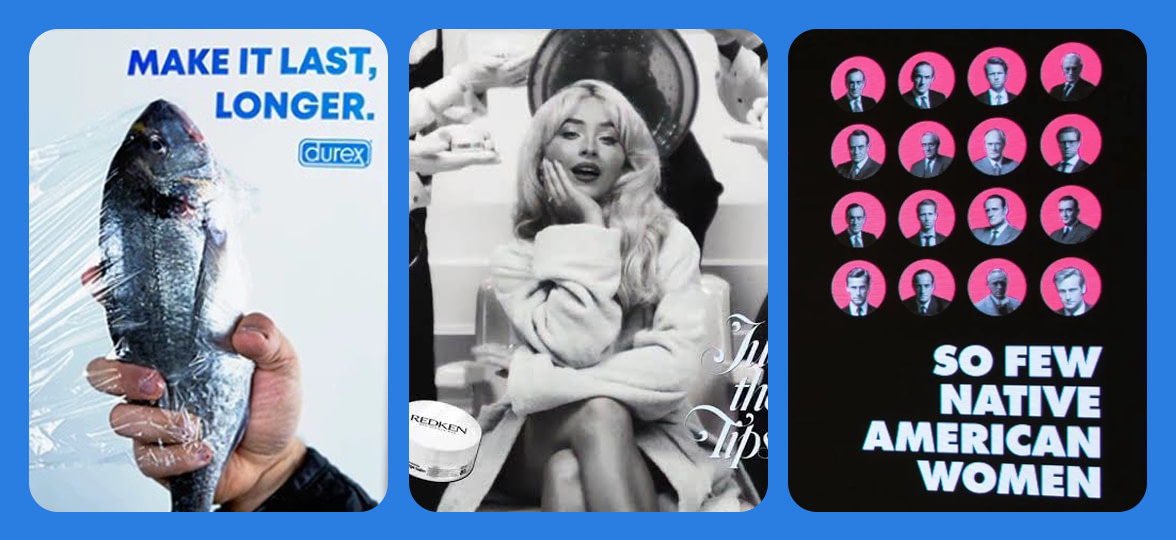
Sex sells. Or so we’ve heard. That old adage has been the backbone of countless ad briefs for decades. But does it actually move the needle?
We’re getting down and dirty with the research, looking at how brands have turned suggestion into a superpower, and what this all means for your brand.
Key takeaways
- Sex in advertising is great at grabbing attention, just not always at driving sales.
- Humor and suggestion can be just as powerful, with far less risk.
- The best innuendo-led campaigns are built on design, wordplay, and a very clear point of view.
- Before going sexy, know your brand, your audience, and where the line is.
The naked truth about sex in advertising
It turns out the relationship between sex and sales is a lot more nuanced than most marketers would have you believe.
Sex is great at turning heads, less great at turning a profit
An analysis of nearly 80 advertising studies spanning more than 30 years found that sex in advertising doesn’t consistently drive sales as marketers assume it does. It’s great at generating attention, but not necessarily converting it into sales.
A more recent field experiment ran a sex appeal ad and a control ad for the same brand on Facebook over the same five-day window. They found that the sex appeal version significantly outperformed on engagement but not on actual purchases.
The ad can outshine the brand
A 2023 study found that ramping up the sexual content of an ad can actually work against you. When the ad itself is what sticks in people’s minds, the brand gets left behind.
It can turn customers
Meanwhile, research also finds that both men and women reported lower product attractiveness and lower purchase intentions when shown sexualised ads compared to neutral ones.
Humor can leave them wanting more
Humor makes ads more memorable and leaves audiences feeling considerably better than a dodgy come-on ever could. A well-placed word, an unexpected double meaning, or a scroll-stopping visual can be just as powerful.
Implication invites the audience in. It asks them to complete the thought themselves, which means they’re already engaged before you’ve even made your pitch.
When sexual suggestion went wrong
Making a sexual faux pas can be brand-defining, in all the worst ways. Here’s what happens when sexy becomes sinister.
Sprite: #BrutallyRefreshing
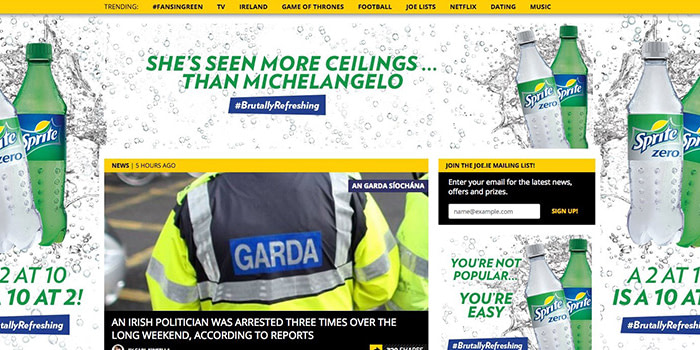
In 2016, Sprite took over an Irish news website with a series of slogans that outraged everyone. Lines like “She’s seen more ceilings than Michelangelo” and “You’re not popular…you’re easy,” were just pure sexism with a smirk. Obviously, there was a huge backlash, and Coca-Cola pulled it and apologised immediately.
Bloomingdale’s: Spike slogans
Bloomingdale’s ran a Christmas catalog ad with the line: “Spike your best friend’s eggnog when they’re not looking.” It was widely condemned as a date rape joke and thousands of people said so on social media within hours.
Three brands that have mastered the art of the raised eyebrow
Sexual suggestion in marketing is one of the hardest things to get right. It has nothing to do with how much skin is on show and everything to do with design and wordplay.
Here are a few of our favorite risqué campaigns and why we loved them.
Durex: Make it last, longer
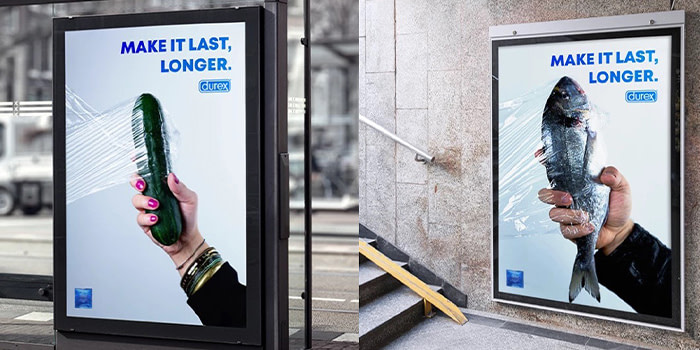
If there’s one brand that’s made a science of saying the unsayable tastefully, it’s Durex. Their creative approach relies on innuendo-driven headlines and the tactical use of imagery (think phallic-shaped vegetables) that helps audiences decode the message quickly without spelling it out.
Why we love it: Durex has a clear point of view. The humor is consistent, and the product relevance is always clear. They create campaigns that are both genuinely funny and educational, without the awkward stiffness that often comes with sexual health messaging.
e.l.f. Beauty: So Many D*cks
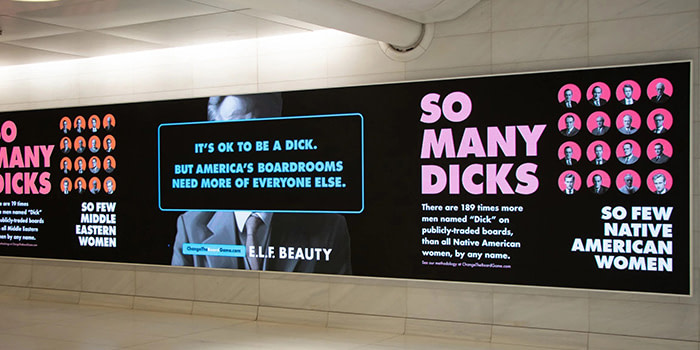
The So Many D*cks campaign took over Wall Street with first-of-its-kind research: across every US-listed company, there were more men named Richard, Rick, or Dick on boards of directors than Black, Asian, and Hispanic women combined. e.l.f. Beauty and agency Oberland manually categorised the race and gender of every single board member using public filings, biographies, and images. It was data that had never been compiled this way before.
Why it works: The double meaning and the message were inseparable. What made it land was the rigor of the original research, the right location, and a brand with the receipts to back every word up.
Redken: Just the Tips
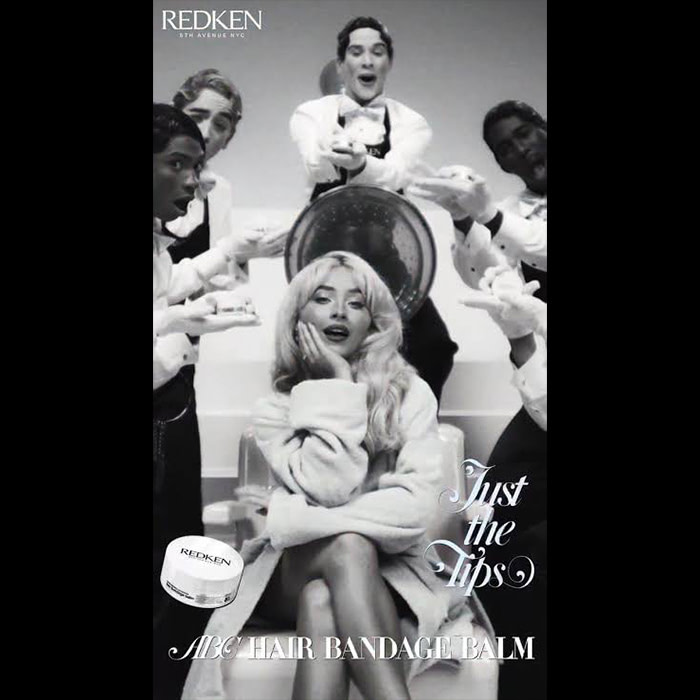
Haircare brand Redken partnered with Sabrina Carpenter for a glossy, vintage-inspired campaign dripping in deadpan wit. The campaign promoted a leave-in treatment for damaged ends, and came packed with lines like “Just the tips” and “Now that is what I call a happy ending.” Every joke was calibrated perfectly to Carpenter’s own innuendo-heavy public persona.
Why it works: The innuendo was layered into something that already made complete sense as a product story.
Five things to consider before turning up the heat
So what does all this sexiness mean for your brand? Well, it all depends on whether it’s right for your brand, your audience, and the specific thing you’re trying to sell. Some things to consider are:
1. Does it fit your brand?
A raised eyebrow lands beautifully when it feels authentic to your brand. When it doesn’t, it reads as a desperate grab for attention. Ask honestly: is this on-brand, or is it just on-trend?
2. Who’s in the room?
Responses to sexual advertising vary significantly by gender, age, and culture. What reads as playful to one audience can land as alienating to another. Know your people.
3. Attention isn’t the same as affinity.
Getting noticed and being liked are different things. An ad that stops the scroll can also make people put down whatever you’re selling and never pick it back up. What feeling do you want to leave behind?
4. Are you suggesting, or just showing?
The brands that do this brilliantly rarely show very much at all. The work is in the implication and the double meaning. If you have to be explicit to land the joke, the joke’s not working.
5. What does the regulator think?
Advertising regulators have pulled plenty of campaigns that confused provocative with offensive. Innuendo done well stays the right side of that line, every time. Know where it is before you start.
Give them something they won’t be able to keep their hands off
From touchy-feely Print to pulse-raising Branded Merch, MOO makes your brand impossible to ignore.
Keep in touch
Get design inspiration, business tips and special offers straight to your inbox with our MOOsletter, out every two weeks.
Share the post
Keep in touch
Get design inspiration, business tips and special offers straight to your inbox with our MOOsletter, out every two weeks.


